What to Expect During a Reiki Session
A grounded, beginner-friendly guide from an experienced Reiki practitioner
If you’re curious about Reiki but unsure what actually happens during a session, you’re not alone. Many first-time clients arrive feeling a mix of curiosity, hope, and uncertainty. You might be wondering what you’ll feel, whether you need to believe in energy work for it to “work,” or if Reiki is right for you at all.
At Halo, Reiki is offered as a gentle, supportive practice—not something dramatic, invasive, or overwhelming. This guide is here to help you understand what to expect during a Reiki session so you can arrive feeling informed, relaxed, and supported.
How You’ll Feel When You First Arrive
Before any energy work begins, the most important part of a Reiki session is how you feel when you walk through the door.
At Halo, Reiki sessions are designed to create a sense of ease from the very beginning. The space itself is meant to feel calm and grounding—a sanctuary from the fast pace and constant stimulation of daily life. When clients arrive, the intention is for them to feel:
Safe and supported
Seen and respected
Free to slow down
Held without judgment
Reiki meets you exactly where you are. You don’t need to arrive calm, healed, or “ready.” Your only job is to show up as you are. The rest unfolds naturally.
What Reiki Is (In a Grounded, Beginner-Friendly Way)
Reiki is often misunderstood, so let’s simplify it.
When we work with facials or body treatments, we’re working with the physical body—the part of you that can be seen, touched, and felt. Reiki works with the energetic body, sometimes referred to as the aura. This energetic field surrounds you and acts as a protective layer between your inner world and the external environment.
Reiki helps support:
Emotional regulation and stress relief
Energetic balance and grounding
A sense of inner peace and clarity
Reconnection to yourself
Many people think of Reiki as “energy healing,” but it can also be understood as energetic hygiene—a way to clear, strengthen, and protect your personal energy so you feel more centered in your body, mind, and spirit.
No belief system is required. Curiosity and openness are enough.
What Happens During a Reiki Session (Step by Step)
A Reiki session is simple, gentle, and entirely guided by your comfort.
Here’s what you can expect:
A brief intake and conversation about how you’re feeling
The option to share as much or as little as you want
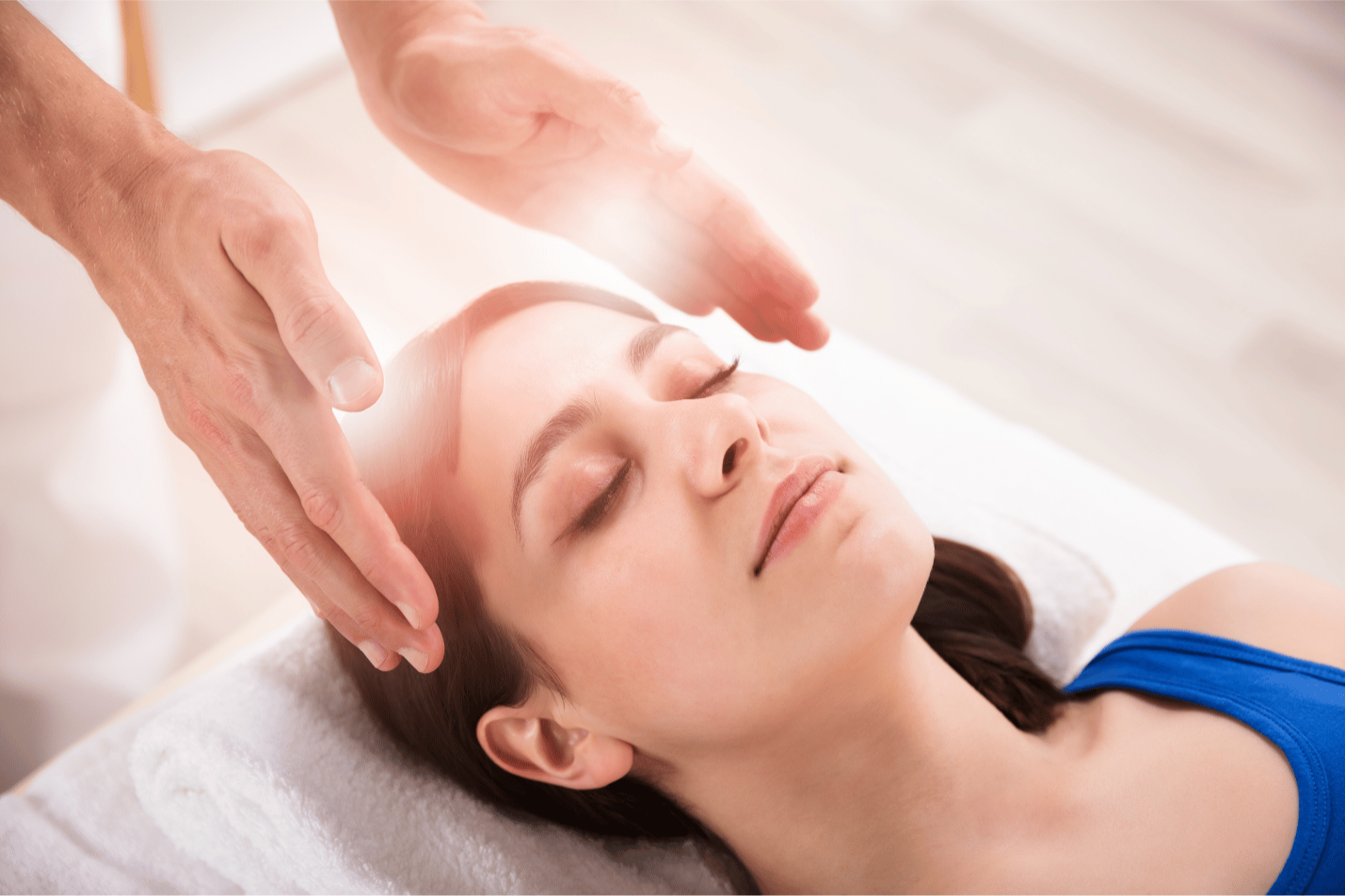
Resting fully clothed on a comfortable treatment table
Light touch or no touch at all, based on your preference
Energy flowing intuitively to areas that need support
During the session, the practitioner’s role is not to analyze or fix you, but to hold a steady, supportive energetic space. Reiki energy naturally moves to where it’s needed most, helping the body shift out of stress and into repair.
For returning clients, sessions may focus on specific energy centers, such as grounding, creativity, heart space, or emotional processing. Reiki always works at your pace.
What You Might Feel During a Reiki Session
Every Reiki experience is personal. There is no “right” way to feel, and no two sessions are exactly the same. Some clients notice physical sensations such as warmth, gentle tingling, or a sense of lightness in the body. Others feel deeply relaxed, as if they are floating or drifting into a meditative state. Emotional experiences may arise as well—memories, feelings, or moments of insight.
And sometimes, clients don’t feel very much at all in the moment.All of these experiences are normal.
One important factor is how you enter the session. When the mind is busy or skeptical, it can override subtle sensations. When you arrive open, curious, and willing to drop into the body, the experience often deepens. Reiki responds to what you allow yourself to receive.
Emotional and Mental Support Reiki Can Offer
Emotionally, Reiki doesn’t create one specific outcome—it creates space. There is no single emotional experience that comes up during Reiki sessions. Each person arrives with their own inner landscape and Reiki responds to what’s present in that moment.
What we often see is that people wait until they are exhausted, overwhelmed, or emotionally burned out before seeking energetic support. Reiki can be especially beneficial as a preventative practice, helping regulate emotions and nervous system responses before stress turns into burnout.
Over time, Reiki may support:
Emotional regulation and balance
Reduced reactivity to stress
Present-moment awareness
A greater sense of calm and clarity
Reiki doesn’t remove emotions—it helps them move through the body instead of getting stuck.
For some, that means a softening of stress or anxiety. For others, it looks like emotional clarity or the ability to let feelings move through instead of getting stuck. Over time, clients report feeling more grounded, less reactive, and more connected to themselves in everyday life.
Many clients choose to deepen their practice through one-on-one sessions or group experiences like our Reiki-infused New and Full Moon experiences, which offer a supportive space for collective relaxation and energetic renewal.
Schedule our Reiki Facial Toady
Boundaries, Consent, and Safety During Reiki
Safety and consent are foundational to Reiki sessions at Halo.
You are always in control of your experience. Reiki does not involve mind-reading, digging for personal details, or forcing emotional release. The practitioner does not need to know your story in order to support your healing.
The role of the Reiki practitioner is simple and intentional: to hold a clear, steady energetic space so your body can do what it naturally knows how to do—repair, regulate, and restore.
This work supports healing at a cellular and emotional level without intrusion.
Common Misconceptions About Reiki - Read our blog here
There are two common misconceptions about Reiki that often sit at opposite extremes.
One is that Reiki is “just placebo” with no real benefit. The other is that Reiki will magically fix everything without any effort from the person receiving it.
The truth lives somewhere in the middle.
Reiki has real, measurable benefits—particularly in supporting nervous system regulation and relaxation. At the same time, Reiki empowers the individual. It doesn’t replace personal growth, reflection, or emotional work. Reiki supports you as you choose to participate in your own healing.
Real-Life Shifts We Often See
Over time, Reiki can support meaningful shifts that unfold gently.
Some clients notice physical discomfort easing as emotional or energetic tension releases. Others experience changes in how they relate to past experiences, finding more ease and less charge around old stories.
Healing often begins when the body feels safe enough to release what it has been holding—and when the mind allows space for a new perspective to form.
What to Expect After a Reiki Session
After a Reiki session, the energy continues working quietly in the background, integrating in its own time. We always encourage clients to be gentle with themselves for the rest of the day. Drinking plenty of water, resting when possible, and allowing moments of stillness can help the body fully absorb the experience. Some people enjoy journaling or making a few notes about how they feel, while others simply notice that they sleep more deeply or feel more emotionally settled.
Clients are encouraged to:
Drink plenty of water
Rest and move gently
Allow time for reflection or journaling if desired
Be kind to themselves for the rest of the day
Many people report deeper, more restful sleep after a Reiki session. Integration is simple—there is nothing you need to do to make Reiki work. Integration happens naturally when you give yourself permission to slow down.
How You’ll Know Reiki Is Working
Reiki is a practice, and its effects are often subtle and cumulative rather than immediate.
You may not wake up the next day feeling dramatically different, but over time you may notice that your reactions soften, your emotions feel less charged, or your mind feels quieter. You may catch yourself smiling more easily, breathing more deeply, or responding to stress with greater awareness:
Softer emotional reactions
Less mental noise
Greater awareness and presence
A sense of lightness or ease
These gentle shifts are signs that the energy is supporting you. Reiki doesn’t force change; it invites it.
Is Reiki Right for You?
If you’re curious about Reiki and wondering whether it’s right for you, trust that curiosity. Reiki begins the moment you choose to pause and care for yourself.
Reiki can be supportive if you’re experiencing stress, emotional overwhelm, life transitions, or simply a desire to reconnect with yourself. You don’t need to be broken to benefit. Reiki is about maintaining balance, not just restoring it.
When you feel ready, the space is here for you.